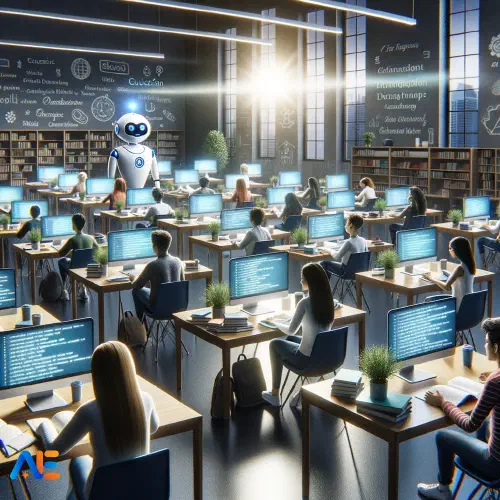
Chatbots, powered by increasingly sophisticated artificial intelligence (AI), are becoming an invaluable resource in the education sector. They are capable of providing round-the-clock support for students, answering frequently asked questions, and even assisting with homework and study tips. Furthermore, they have the potential to free up valuable teacher time by handling routine inquiries. This post explores the role of chatbots in education and how they can be tailored to provide effective student support.
24/7 Student Support
One of the most significant advantages of chatbots is their availability. Unlike human tutors or teachers, chatbots can provide support 24/7, making them a highly accessible resource for students who may need help outside of school hours. Whether a student is struggling with a maths problem at midnight or needs a quick grammar check early in the morning, a chatbot is always ready to assist.
Answering Frequently Asked Questions
Chatbots can be programmed to answer a wide range of frequently asked questions. From queries about assignment deadlines to questions about course material, chatbots can provide instant responses. This not only benefits students by providing immediate answers but also reduces the workload for teachers, who would otherwise have to respond to these common questions individually.
Homework and Study Assistance
Chatbots can also play a crucial role in assisting students with their homework and study. They can provide hints and tips, guide students through complex problems, and even suggest additional resources for further learning. However, it’s important to note that chatbots in education are not designed to provide direct answers. Instead, they are designed to promote learning by guiding students with open-ended questions and hints, encouraging students to arrive at the answer themselves.
Freeing Up Teacher Time
By handling routine inquiries and providing homework assistance, chatbots can free up significant amounts of time for teachers. This time can be better spent on tasks that require a human touch, such as providing personalised feedback, developing lesson plans, or engaging in one-on-one tutoring sessions.
Tailoring AI Chatbots for Education
To be effective in an educational setting, chatbots need to be tailored to the specific needs and challenges of students. This involves programming the chatbot to understand and respond to a wide range of educational topics, as well as ensuring the chatbot promotes learning rather than simply providing answers.
One approach is to design the chatbot to guide students through a problem-solving process. For example, if a student is struggling with a maths problem, the chatbot could ask leading questions to help the student understand the problem better and guide them towards the solution. This approach promotes critical thinking and problem-solving skills, rather than rote memorisation.
In conclusion, chatbots have a significant role to play in automating student support. By providing 24/7 assistance, answering frequently asked questions, and guiding students through their homework, chatbots can enhance student learning and free up valuable time for teachers. As AI technology continues to advance, the role of chatbots in education is likely to become even more prominent.