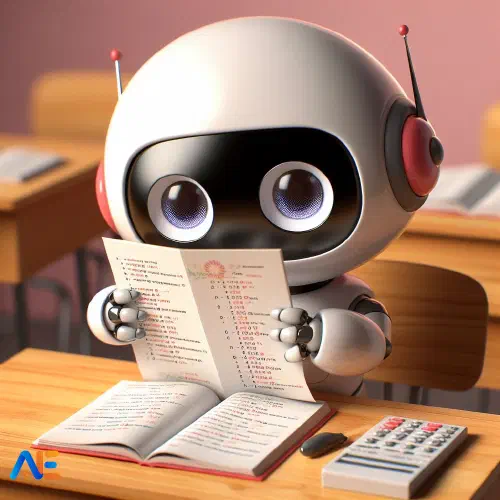
In today’s educational landscape, the integration of artificial intelligence (AI) has sparked both excitement and concern. While some fear that AI might encourage academic dishonesty, it’s crucial to understand that, like any tool, AI can be used both ethically and unethically. This post delves into how students can harness the power of AI to enhance their learning experience and avoid the pitfalls of using AI to cheat or take shortcuts.
Review My Draft Essay
One of the most beneficial ways students can use AI is for essay review and feedback. AI-powered tools can provide detailed insights into grammar, coherence, and structure, helping students refine their drafts.
Prompting tools like ChatGPT can help guide students through errors and explain in depth why certain corrections are necessary. In such cases the student would request a review of the essay, and the AI would provide feedback on the content, grammar, and style. The student could then follow up with questions to clarify the feedback before going on to revise the essay.
This process not only improves the quality of the essay but also helps students learn from their mistakes and develop better writing skills by knowing why certain corrections are needed.
Explain Concepts
AI can act as a personal tutor, providing explanations for complex concepts in a way that is easy to understand. Often the AI can adapt its explanations based on the student’s level of understanding, providing more detailed information for students who need it and simplifying explanations for those who are struggling. It may also be able to explain in another way or from a point of view the student can relate to better.
This personalised approach to learning ensures that students grasp the fundamental principles before moving on to more advanced topics.
Improve Accessibility for Students with Learning Difficulties
AI has made significant strides in improving accessibility for students with learning difficulties. Tools like text-to-speech (TTS) and speech-to-text (STT) can assist students who struggle with reading or writing. For instance, TTS software can read aloud textbooks and articles, making it easier for students with dyslexia to comprehend the material.
Similarly, STT technology can help students with writing difficulties by transcribing their spoken words into text. Additionally, AI-powered translation tools can bridge language barriers, making educational content accessible to non-native speakers.
More recently, tools like ChatGPT with the new GPT-4o model is making vision-to-speech possible. This technology can be used by students with visual impairments to have text, images or even graphs described to them, making visual content more accessible than ever before.
Although AI can have a big impact on physical accessibility, it can also have a large impact on cognitive accessibility such as ADHD, Autism, and others. AI can help students with these disabilities by providing a more personalised learning experience, such as breaking down complex concepts into smaller, more manageable parts, or adjusting the content to suit the student’s interests.
Practice Answering Questions
AI can simulate interactive learning experiences, such as debates, Q&A sessions, and dissertation defences. Chatbots powered by AI with an educational focus can engage students in conversations, ask questions, and provide feedback based on their responses.
This interactive practice helps students build confidence, improve their critical thinking skills, and prepare for real-life academic challenges.
Make Certain Topics More Relatable and Engaging
AI can transform traditional learning materials into engaging and relatable content. Imagine reliving historic events through a social media platform designed by AI. For instance, students could follow a mocked up social media feed that posts updates as if they were happening in real-time during the American Revolution.
This immersive experience makes learning more interactive and memorable, helping students connect with the material on a deeper level.
Convert Scientific Concepts into Mini Games
Gamification is a powerful tool for making learning fun and engaging. AI can convert complex scientific concepts into mini-games that reinforce learning through play. For example, an AI-powered app could turn the periodic table into a puzzle game where students match elements with their properties.
This approach not only makes learning enjoyable but also helps students retain information more effectively.
Avoiding the Pitfalls of Using AI to Cheat
While AI offers numerous benefits, it’s essential to use it responsibly. Here are some tips to avoid using AI unethically:
- Understand the Purpose: Use AI as a supplementary tool to enhance learning, not as a replacement for your efforts.
- Seek Permission: Always check with your educators before using AI tools for assignments or exams.
- Learn from Feedback: Use AI-generated feedback to improve your skills, rather than simply accepting the suggestions without understanding them.
- Maintain Academic Integrity: Avoid using AI to generate content that you present as your own. Plagiarism detection tools are becoming increasingly sophisticated, and academic dishonesty can have severe consequences.
In conclusion, AI has the potential to revolutionise education by making learning more accessible, engaging, and personalised. By using AI ethically and responsibly, students can enhance their educational experience and develop skills that will serve them well in their academic and professional careers.
Remember, not all AI is cheating - when used correctly, it’s a powerful ally in the pursuit of knowledge.